Wahala for Who Sign Record Deal As Teenager? Qing Madi's Music Taken Down Again!
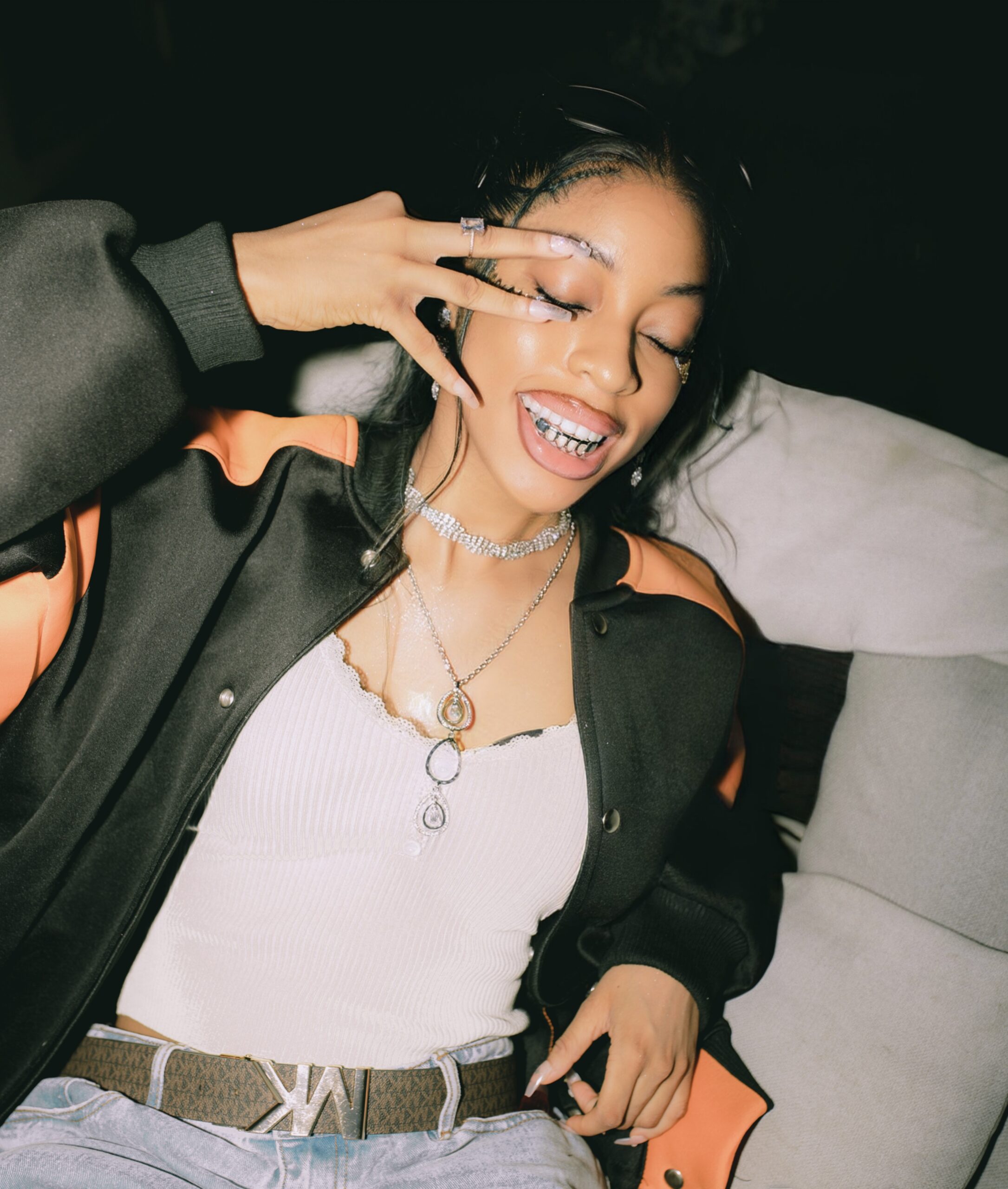
Five of the seven songs from Qing Madi’s EP Barely Legal vanished from Spotify on 3 June. Tracks like “Lady,” “10 Over 10,” “1 or 2,” “Jowo,” and “Adding Up” were chilling on the platform in the morning, only to disappear by evening. This EP was just one month old, and Qing Madi was nineteen at the time.
This no be the first time this kind thing dey happen. Back in April, her collabo with Zinoleesky, “Pepper Me,” also disappeared before it later came back after some serious challenge. By June, the pattern was clear, so Qing Madi took to Instagram and TikTok Live to talk her truth. “I may be young but I’m not dumb,” she wrote, emphasizing, “I wrote my songs. By myself!!!!” She even threw it back almost a decade, reminding everyone, “The first artist you signed Cynthia Morgan cried. And now you’re doing it to a literal teenager.” Omo, the drama is plenty!
The Gist: Music Off the Air
The takedowns are part of a contract wahala with JTON Music, the label Joy Tongo founded that signed Qing Madi in late 2022 after her song “See Finish” blew up. She was just sixteen then, so her mama had to sign as her guardian. For three years, things seemed to be going well. Her songs “Ole” and “American Love” both hit over one hundred million Spotify streams, a flex JTON themselves proudly mention. Apple Music even put her on their Rising Class of 2024, and she scooped Songwriter of the Year at The Headies.
But early this year, she moved on to her own imprint, KFMD. JTON sued for breach of contract, asking for between $1 million and $2 million to recoup their investment. A Lagos court granted part of their application for an interlocutory injunction, which is like a temporary freeze, pending the full trial. Qing Madi’s camp dey argue say the agreements na infancy contracts, signed by a minor and lawfully cancelled when she turned eighteen. They insist she's still free to release and perform under her own name while the case is on. JTON, on the other hand, says the agreements still stand, denies any allegations of forgery and theft, and maintains that the takedowns are valid under the court order until a judge says otherwise. Qing Madi's KFMD Label is even disputing JTON's interpretation of the recent court ruling, insisting she ended the relationship lawfully.
No final judgment has been published yet, and nobody knows the hearing date. Spotify has also kept quiet. Court documents obtained in July, covering contracts signed when she was a minor, royalty disputes, and audit requests, tell a different story from what played out online.
Industry Wahala: It's Not Just Qing Madi
This kind of situation, where an order is granted in weeks but the main trial no fit happen for eighteen months, is the real gist here, and it's not only happening to Qing Madi. Many artists dey face similar battles. Kizz Daniel, for example, left G-Worldwide in 2017 and had to change how he spelt his name because the old one was tied up in legal drama. Shallipopi, T.I Blaze, and Seyi Vibez all challenged a ten-year distribution deal with Dapper Music, alleging a disputed signature after their catalogue was licensed to Virgin Music. T.I Blaze claims over ₦1.2 billion is missing, and Shallipopi says more than $1 million. Dapper maintains they did nothing wrong. Burna Boy’s masters moved to his own company in 2024, but Aristokrat’s 960 Music quickly challenged it, claiming a forty per cent stake in suits filed in both Lagos and Port Harcourt. Praiz signed with X3M in 2010, left in 2020, and in February, a court appointed a provisional liquidator over traceable assets. Even Cynthia Morgan's contract with Northside was published in full by Jude Okoye in 2020. Go back further, and Wizkid’s EME deal reportedly took around twenty-five per cent of his earnings from music and performances.
Eleven such disputes have surfaced in nine years. When you look at them all, it’s not really about who is right or wrong, but who has the money and power to wait it out.
Nigerian recording contracts often sign artists early, sometimes when they are too young to get their own lawyer or even sign legally. These contracts typically don't just cover the recordings; they can tie up an artist's stage name, entire catalogue, and even future work. Plus, they usually run for a long time, sometimes a decade or multiple albums, instead of anything an artist can easily control. While these terms aren't entirely new, what has changed is how they are enforced.
Who Really Wins?
Now, if a label wants to stop an artist, they don’t need to win the case first. They just apply for an interlocutory order, which is a temporary measure until the trial, and can then ask streaming platforms to pull the music. That order takes weeks, the actual trial takes years, but the music takedown happens in an afternoon. Since most of an artist's earnings now come from streaming, pulling their songs stops their income, stops them from building listener numbers for gigs and brand deals, and makes them practically invisible to new fans. Afrobeats is blowing up, yet Nigerian artists' Spotify earnings only grew by 3.45 per cent in 2025. There’s no financial cushion for an artist to be offline for a year. So, when you do the math, two songs hitting over one hundred million streams each, a Headies win, an Apple Music cohort spot, then five out of seven tracks pulled a month after release at nineteen? A label can lose at trial in 2029 and still basically win. The artist? Nah, their career has a peak, and that peak no dey pause for court dockets. Maybe it's time for some fixed notice period before takedowns, so artists' lawyers at least get to read the papers first.
What do you think needs to change for Naija artists to truly own their craft?